Friday, March 8, 2013

A Place to Stand?

The following is drawn from a message delivered in ESR and Bethany Joint Worship on February 22 by David Johns. This material is part of a larger project David is working on entitled "Mobility, Displacement, and the End of Solidarity":


“Give me a place to stand and I will move the world” – Archimedes
“Here I stand, I can do no other; God help me” – Luther
“Will you still love me tomorrow?” – the Bee Gees

It was a triumph of imagination when the third century BCE philosopher Archimedes said he could move the world if he had a place to stand. He calculated how large items could be moved with little effort if he placed a fulcrum in just the right spot along a lever. He did the math and it worked. But his imagination went wild as he considered stepping off the planet itself in order to lift it. Can openers, fingernail trimmers, teeter totters, catapults, crow bars, tire jacks, and light switches all resulted from his insight, but Archimedes never could find a way steady place off the planet in order to move it. That place does not exist, but in many ways we are still looking for it. And theology and religious folk lead the charge.
Through the years and as recently as last Sunday and this morning, God has been treated like Archimedes’ fulcrum, a fixed point that can be depended upon to steady ourselves and to move, if not the world, at least our corner of it. God is where the buck stops. From this point systems have been built, arguments launched, wars waged, and hope rooted. Even for Descartes who built a way of thinking on methodical doubt, God was foundational, like the function of zero for mathematicians—a base to keep the bottom from falling out.
But so many of the images of God that have been passed down through the centuries describe God as something moving, flowing, and wildly unpredictable. Moses discovered this in a burning bush and in a passing shadow; Nicodemus did too when Jesus said the movement of God’s spirit is like the wind. That’s unsettling and unacceptable when you’re looking for a firm place to stand.


So, when God doesn’t cooperate, other fulcrums have to be used: the Bible, religious law, laws of reason, the authority of approved teachers, the Church (denominational founders/leaders: Alexander Mack, George Fox, Troy Perry, Emanuel Swedenborg, Mary Baker Eddy, Joseph Smith). Or even human experience. In one form or another and at one time or another, each of these has been held out as sure and reliable, a fixed point on which we can safely build our house.
And, in order to provide a sure footing, these fixed points need to be protected and bolstered so as to avoid challenges to their authority or to convince us of their reliability. Thus, whether we want to or not, many of us find ourselves arguing in support of something good and valuable, but of transient value (“It’s not 1652 anymore”). We can legitimize it by thinking somehow we are arguing for God, or somehow defending God’s honor against the hordes of evil (or at least against the multitudes of unenlightened). But at the end of the day we in fact are defending the slippery foundations of our own certainty. It is like frantically writing with a pen that has no ink or a roller ball that is frozen. The harder we try the more likely we’ll tear the paper to shreds. Better to acknowledge that we are writing outside the realm of ink—so, sharpen a pencil and do the best we can in the present moment. Whatever will stand tomorrow will be here tomorrow. It will take care of itself—today has enough challenges of its own.
What is important to note is that this clamoring for certainty is not a characteristic of one persuasion of another. I say this because I sometimes hear people characterize conservative persons as needing security and assurance that they do not.
However, the reality is that even if sources such as the bible, doctrine, law, and the like, are rejected, they are generally replaced with a foundation of experience—personal experience. This becomes the unchallengeable, unquestionable last word. Although the place of authority and certainty changes, there remains an effort to be sure and rooted, even if it is principally within the individual person. On this point, conservative and liberal are kin.
Archimedes’ genius is indisputable and his fulcrum point is so true, it would seem, that it functions in a thousand ways in our lives each day. However, he never accomplished the imaginative goal of stepping off the planet in order to move it. Likewise, we can’t step outside the flux of our lives in order to secure a footing to move our lives. We are in our life—fully. 100%, 24/7. Attempting to leave our life to make better it, only adds to the chaos and anxiety that drains life out of the life we so desire.

Life in Flux

It goes without saying that life is a constant movement. What does merit saying is that this is not new. Its part of the arrogance of every age to assume somehow it is completely unique and that its challenges and its delights are new discoveries. In one sense we are always “discovering” for the first time what previous generations discovered for the first time that previous generations had discovered for the first time (that previous generations…you get the point).
Clearly, in response to the movement, the in-fluxness of existence, people have looked for solid ground as far back as we can imagine. This desire, and maybe it is a psychological need, is intensified in times of uncertainty and change, in ‘liquid times,” as Zygmunt Baumann calls it—whether change is real or imagined. When threats come to our integration, in whatever form, the desire for stability increases. Shifts in culture, in demographics, in economic conditions, and so on, add to the feeling of insecurity and prompt efforts to establish security and certainty. This can be seen in various forms of group solidarity against “others” who are perceived as threatening social stability—who is in and who is out. Urban theorist, Nan Ellin suggests that “form follows fear.” She discusses the ways in which urban spaces are designed to “protect” against modern fears but end up becoming what she calls “architecture of fear,” which actually perpetuates and expands the very fear from which these spaces allegedly protect us.
Flux and movement challenge the very notion of “place”—here and there. “Vituality” makes real what may not be—or at least it posits in real-time and in semi-concrete ways, worlds not visible on any map. Where precisely is “there?”
I remember a Sesame Street skit that tried to teach the concepts of here and there. “I am here. You are there,” said one Muppet to another, over and over until it was clear. Then, someone else walked onto the set and said to the one who was “here,” “Hey, what are you doing there?” Funny and ironic, even then. However, virtual worlds are inhabitable worlds, and not only for self-indulgent, isolated individuals. These worlds are inhabited by tens of thousands of people who interact with each other there and who develop parallel and distinct lives, while physically inhabiting another space. They are both here and there, simultaneously—there and not here—wherever “there” is.
My son, Nick, a university sophomore, is a lead programmer with a group called Hoosier Games. They are designing interactive computer games which not only “connect” people, but that place them together is a space neither here nor there, but a space that is real and inhabitable and that is populated by flesh and blood human beings.
Although few would contest this portrait of our own time and the shape of our societies, the urge is strong to seek the Archimedean grail of the fixed point beyond our lives, the fixity from whence we can move the world. It is a utopian vision which can consume much of our lives [Real Academia Espanola defines utopía: “un lugar que no existe”]

Staying Connected

The more committed we are to fixity, to ideas, or to the substitutes for stability –bible, law, even our own personal experience—the less we need to be oriented to God in a living relationship/friendship. Clearly, the life lived in the adventure of mystery is open-ended and doesn’t give us much, if anything, solid to stand upon. However, we move, we follow the pulsing, blowing spirit.
I’ve often thought about Moses in this sense. Moses wanted to see God—and why not? It seemed like the least God to do for a man who had done so much. However, God’s response is illuminating. If you see me you will die. You can see my passing presence. And that’s as good as it gets.
There really is only one posture we humans can take in response to such a manifestation of God—follow, move. It does no good to fall on our face in worship or to build a shrine. God, if God had been there in the place we kneel down, is not there now. The presence has moved on. Peter wanted to remain on the Mount of Transfiguration to hold onto an experience of God’s presence. This is understandable. But Jesus knew better. We see nothing of his conversation with Peter, only the result. They leave the mount and return to the crowds to carry on and continue moving where the spirit was leading.
But when we have the security of objects, be they scriptures, or laws, or holy people, or well-developed systems, we can convince ourselves we are holding on to something real. And for a moment it is real. But then it is not. Nancy Wilson, Presiding Elder with the Metropolitan Community Church said, “We have to continually reinvent ourselves if we are to keep up with God.”
I took pictures of my wife just as she was being pulled into the air on a parasailing ride. We laughed when we viewed them later that day. Most were blurry shots of the sand. In the time it took the shutter to open and close she had moved upward. So it is with God…only a thousand times more. A snapshot, which Moses might have liked, captures a place where God was. The bible, as important as it continues to be for the community of faith, is a snapshot of a place where God was, not where God is—unless it is being read together by a community on-the-go. The cherished holy sites and objects and practices of our denominational traditions say “Kilroy WAS here, not that Kilroy IS here.” Holding on too tightly is the surest way to miss the moving, living presence of God.


As soon as the ink dries on our theological statements, our systems, our sermons that work together so well, so beautifully, God has moved on. It’s not that the statements are not true; just that they are dated.
But whatever theology is—this whole practice of imagining and reflecting upon faith and life—it seems to me to be more like art—maybe choreography.
Karl Barth spoke of theology being free—that is right, I think. Unless it is free it cannot be responsive to the Spirit that moves and surprises. And, of all the things it needs to be free from, in the first place, it needs to be free from itself. When we take ourselves too seriously, in whatever theological work we do, then we are not free and are on the brink of idolatry. If there is anything that becomes dated before the ink dries it is our talk about God.
Archimedes wanted a place to stand…so did Luther, so did Elton Trueblood, so did the Bee Gees.
But standing is not an option.
What do you stand for? I don’t stand for anything.
I move.
I move.
I move for/with God.

David Johns is a graduate of ESR and the School's Associate Professor of Theology.

Thursday, February 28, 2013

A dialogue with Peter Rollins

Peter Rollins is this year’s ESR Willson Lecturer on April 8. Our hope going into this year’s Lectures was that they would not just be a one-time encounter with a theologian, but include community-wide discussion both before and after Peter’s visit to campus. We are pleased to share that this is already taking place online, and invite others into the discussion. Below is a summary of a recent dialogue between Peter and ESR alum Micah Bales:

AFL

Among other things, Peter is behind a campaign called “Atheism for Lent.” As described on the site, “Atheism for Lent seeks to use some of the most potent critiques of Christianity as a type of purifying fire that might help us appreciate and understand Christ’s cry of dereliction on the Cross in a new way. Just as Christ experienced the loss of God on the Cross, so Atheism for Lent invites participants into that desert space traditionally called the dark night of the soul.

After hearing about and looking into this campaign, Micah posted an article on his blog – “Should we give up God for Lent?,” in which he makes the case that “Tearing down false images of God is an important task, but this cannot be the end of the story. God does not leave Job sitting on ashes and picking at his sores. After the night must come the dawn. Unfortunately, Rollins seems unwilling to engage in the process of developing an alternative vision. Rather than offering a positive understanding of who God is, he seems solely interested open-ended deconstruction.”


After some online discussion, Peter responded to Micah with the post “How Could I Possibly Need Atheism For Lent? I Need God Like I need Air!” In this response, Rollins suggests that “those in the Liberal tradition generally advocate a form of perpetual concrete action when faced with the injustices around them. In the words of Levinas, the face of the other issues a cry for help and the liberal is one who responds directly to that cry. The issue here is the nature of the response, one that can be termed ‘perverse.’ The pervert is, psychoanalytically speaking, unable to say ‘no’ to the desire of the other. The pervert’s desire is to be the object of the others pleasure. They are the one who always says ‘yes.’

“In a similar manner the liberal experiences a cry in the concrete face of the other that always demands a direct response. Hence there is a dislike of critical theory, which involves a form of stepping back from that cry (attending university, reading, writing etc). In Micah’s piece this is classically played out in his use of words such as ‘intellectualism’ and ‘elitism.’ Because the liberal tradition always attempts to say ‘yes’ to the call of the other any form of theoretical activity is viewed as oppositional to (or, at best a distraction from) the emancipatory project. The European tradition of Leftist theory is seen as divorced from the exigencies of actual action to eleviate inequality. Theory is seen as a type of second-order reflection on political activity rather than a form of political (in)activity. We see here, of course, the influence of American pragmatism.

“From the Radical perspective however the perverse response needs to be avoided. This means that there are times when we should refuse to respond to the concrete cry of the other for the sake of wider and deeper transformation. This means having to take on a certain guilt while working toward real change.”


Micah followed up with a response to this, “The Radical Within,” where he argues “that the answer to an unreflective faith is not to cease action, but rather to engage in action that is informed by reflection. The proper response to a religious life that is overly dependent on individual experience is not to deny experience, but rather to hold that experience in dynamic conversation with theory. If we are to live out the full gospel, a balanced and complete gospel, we must wed faith and action, experience and analysis.”

What do you think about Micah’s and Peter’s comments? Do you find the concept of “Atheism for Lent” helpful or not? What other elements of Peter’s work do you find yourself either resonating with or pushing against?

Tuesday, February 19, 2013

ESR Alum releases new CD


ESR Alum Adam Webber shares a bit about his new CD project - how it developed during his studies at ESR , and how it fits into his pastoral ministry now:


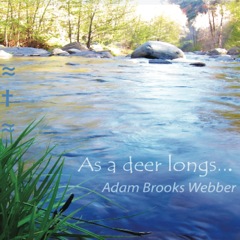
My new CD, "As a Deer Longs", should probably have been subtitled, "A Soul Slogs through Seminary".  I wrote most of the songs on it while I was working on my M.Div. as an Access student at ESR, between 2007 and 2011, and I recorded, mixed and mastered six of the songs during my Supervised Ministry project with Stephanie Crumley-Effinger.  The artwork for the album (including the 12-page booklet insert) is the inspired contribution of my dear seminary friend and fellow graduate Rob Pierson.  So maybe the album should have been subtitled, "Two Souls Slog through Seminary".  But Rob can speak for the artwork himself, if he chooses.  Here’s my rundown on the music, track by track.

The first song is called “Longs for You”. I think this song is my elevator pitch for God.  What I don’t know about God is a lot -- Master of Divinity, indeed! -- but the diamond core of the little that I do know is in this song: the intensity with which God loves us and longs for us.  I wrote and performed this song for a day-long retreat I led as part of my supervised ministry project.

Next, there’s “Me and Joe and What’s-His-Name”.  This is in more of a folk-song style, and you can hear a bit of the English folk ballad “The Three Ravens” here.  It tells, from a different perspective, a story from the Gospel of Luke, chapter 23.

Then there’s the “Prophet’s Lament”.  This is an autobiographical, comical song about my recent change of career.  I used to listen to my parents’ Tom Lehrer records, and I guess his influence on my songwriting is pretty clear.

The fourth cut is an instrumental version of my “Rider’s Lament”.  I originally wrote this for an a capella vocal trio.  Fans of Tolkien will be able to guess what the words were, laden with the sadness of mortal life.  (I’d publish the sheet music for the vocal version but, sadly, one can’t get rights for the lyrics.)

The fifth track is “Clear Fountain”.  The beautiful background vocals are by my wife, Kelly Autrey-Webber.  My French Canadian grandmother used to sing an old folk song, “Ã la claire fontaine”, well known to French-speaking people the world over.  I don’t suppose anyone else thinks of that as a religious song at all, but for me the clear fountain long ago became an image of God.  My song “Clear Fountain” expresses this.

Then there’s “I Don’t Believe in You”, a blues ballad.  I wrote this song to share the story of a man I met, a Vietnam veteran who was camping, or perhaps living, under a highway overpass not far from Richmond.  When I told him that I was a seminary student, he told me that he didn’t believe in God -- and he told me why.  My brother Ben helped with the piano arrangement for this.  He’s a jazz genius.

Track seven is “Fear Not, Said the Angel”. It’s the only song on this album that I’ve recorded before.  It’s about some of the experiences of God’s presence that I had as a child.  I used to find these very frightening, and I didn’t tell anyone about them at the time.  I didn’t want people to think I was crazy, and I didn’t want them to be right.  In fact, writing this song was the first time I shared any of these experiences with anyone but my wife.  Kelly and I sing this one together.

Next is another reflective instrumental number: “One Needful Thing”.  It’s part of a song cycle about the six-day creation story from the Book of Genesis.  This is Day One -- let there be light -- and the last cut on this album is Day Five -- the creation of the animals.  I wrote these as part of my work for a class led by Bethany professor Dawn Ottoni Wilhelm, a class on Celtic Christianity that took us to the island of Iona in Scotland.  My blog at adambrookswebber.com has links for downloading sheet music for the choral versions, as well as more information about my CDs and other works.

Track 9 is my “Treesong” -- a choral/instrumental anthem as sung by a tree.  A worshipful tree.  It’s hard to explain, but my wife says it’s her favorite.

Next is “Love Small”.  This is a sort of alternative-country song in praise of my little home town of Princeton, Illinois, and in praise of small things in general.  I couldn’t decide whether to include this one on the album or not.  Sometimes, when I listen to it, it seems too corny.  Other times, I think that corny was just the right note to hit for Princeton.

The final cut is “Come to Me” -- an over-the-top, wall-of-sound take on the creation of the animals, complete with animals.


I am currently an ordained minister of the United Church of Christ, serving for 30 hours a week as the sole pastor of a small UCC church in Clare, Michigan.  I enjoy the work of pastoral ministry: making pastoral visits, planning worship, preaching, and so on.  But even as I enjoy the work, I know that there are many people I will never be able to reach with it -- many people who will never set foot in my church, or in any church.  For me, music is another channel, a further way of answering my call to ministry.  It certainly isn't a money-making activity.  I'll be very happy if I can sell enough copies of the CD to cover the costs of production.  But it satisfies my restless heart, my need to share with other people what God shares with me.  And it was a great blessing to attend a seminary where this and many other forms of ministry are valued and supported.

Tuesday, January 22, 2013

Seeking out the stories of those who are different from us


Anne Marie Roderick will be presenting on her interfaith work during Peace Forum in the ESR Dining Room on Thursday, January 31. Her presentation is one of several events taking place during Earlham College's Religious Emphasis Week, which includes a lecture by Interfaith Youth Core founder Eboo Patel. Below is a reflection from Anne Marie on what led her to pursue interfaith ministry.
When I was in middle school growing up in New York City, I had a Muslim friend named Salima.  Salima and I were close.  We ate lunch together, went over to each other’s houses after school, hung out on weekends.  When planes hit the World Trade Center towers On September 11th, 2001 we were both in eighth grade.  Our whole school was in panic; our principal told us that World War III may had just begun, rumors about the attack were flying from classroom to classroom; students and teachers were desperately trying to reach friends and family all over the city. In all the frenzy, I don’t remember talking to Salima much that day at school, but after I was safe at home with my family and some of our friends who couldn’t get to their own homes, I called her. 
         Everyone was somber, but Salima’s voice over the phone was trembling.  “Two of my cousins were in one of the towers,” she said. “They’re not answering their phones, we don’t know where they are.” In the hours and days that followed, Salima and I called her cousins’ cell phones in case they or someone with information about them might pick up and we put missing signs up around the city.  Weeks later I attended a public memorial service at Yankee Stadium with Salima and her family for all of the lives lost in New York on that day. 
Back at school, most things eventually returned to normal, but Salima’s life didn’t.  In addition to losing her cousins, Salima became the target of anti-Muslim slurs.  Kids at school teased her for looking “Arab” and she was afraid of being harassed or worse by people on the streets.  At the time, I didn’t have the tools to support Salima; I didn’t know how to stand up for her, how to challenge those around me who called Muslims and Arabs terrorists.  I thought it would all pass. I didn’t see that our world was entering an era of increased religious intolerance and violence that would continue into my adulthood.
I mark the events following September 11th as the beginning of my commitment to interfaith work, though I wouldn’t realize that until more than 6 years later, during my first year at Earlham. Now that I am attending Union Theological Seminary and preparing for a life in ministry, I feel even more passionate about the need for interfaith cooperation, especially on the part of those entering Christian ministry.
If we are connected to faith and spiritual communities we have a crucial role to play in promoting religious pluralism and engaging religious diversity in and around those communities. As current and future faith/spiritual leaders, our work can begin by claiming the stories that most inform our own faith journeys. Once we know our stories, we can begin to share those stories with others and seek out the stories of those who are different from us.

Wednesday, January 16, 2013

New student introduction


We're excited to introduce to you some of our new students joining us for the spring semester of  the 2012-13 school year. Today's featured student is Christie Walkuski, who is an MDiv Cooper Scholar from Cornwall, NY.


Hello friends! I am super excited about starting my studies at ESR, and (even with the small thought that pops in: “what on earth am I doing?!”) trusting that this next adventure is the result of divine inspiration and leading. As the time is nearing for me to pack up and head for Richmond, I am a mix of wonder and gratitude and nervousness.

I have previously studied environmental science and policy, peace and social justice issues and movements, botany, Buddhism, poetry, and maybe most importantly, the workings of my own mind and heart.  I have worked mostly within the environmental and non-profit arena, recently for Hudson Link, an organization that facilitates college education programs within New York State prisons.

I want to study all of ESR’s competency areas, but a chaplaincy track through the pastoral care emphasis is the one I have decided on at the moment. I’m also very interested in the idea of writing as ministry, in conflict resolution and reconciliation processes, and interfaith understanding and activities.  I’m excited to approach learning in an environment that emphasizes my own spiritual development, and where I can challenge my own thinking about things like identity, the church, God, and what it means to live a spiritual life. 

Currently I have been inspired by the indigenous movement called Idle No More (www.idlenomore.com), emerging recently after the Canadian government passed legislation which cut treaty rights and land and water protections. The images, words and prayerful action coming out of this movement have caused me to reflect about the reality and legacies of colonization, genocide and institutionalized racism, and also, more importantly, about how to resist these forces, and about the need for different ways of knowing and being and thinking. Am I personally willing to walk in this largely unfamiliar territory?  Can I commit to an awakened life?   Am I courageous enough to be idle no more?  These questions and thoughts have converged with my discernment about entering seminary.

The answer is YES.  I trust that I will continue to find out what such a life looks like and how I can best be of good use and purpose as I navigate through it with all of you at ESR in this next part of my journey.

Monday, January 14, 2013

Writing as Ministry


By: Amy Lyles Wilson

Before I visited ESR for the first time in 2000, to attend the Ministry of Writing Colloquium, I’d already worked as a writer and editor for about 15 years. I had a master’s degree in journalism, and published credits to my name. Along the way, I had heard writing described as an art, a talent, a gift; maybe even a way to make a living, in a good year. But I had never heard it considered a ministry.

All that changed when I saw an ad in The Utne Reader for the Ministry of Writing Colloquium at ESR. I was not familiar with Earlham College, the Earlham School of Religion, or anything related to Quakers or Indiana. But something led me here.
Amy Lyles Wilson - 2012 Writing Colloquium

Since attending that Colloquium, I have come and gone from the sacred space that is ESR many times. I’ve taken classes, served as a writing fellow, presented at colloquiums. I’ve learned to sit in the silence without squirming (I’m a practicing Episcopalian). And now, the best gig of all, serving as an adjunct professor in the writing program.

In 2003, while on the ESR campus for a semester, I had the pleasure of knowing, and loving, Tom Mullen, the driving force behind the development of ESR’s writing program. He was my mentor, coach, teacher, and friend. His death hit me hard. To think that I might be able to contribute to his legacy fills me with gratitude, and, I must admit, a bit of intimidation. 

Whether you’re an academic, a preacher, a pastoral counselor, or one who labors in the field of social justice, your words matter. Effective, evocative communication is vital to our human connection, be it from behind the pulpit or on the Internet. I believe it is the sharing of our stories that saves us, and toward that end I “teach” writing—as much as it can be taught—in the hopes of helping people tell their stories in their own words, using their own voices. Most often, all that writers need to is space and permission, a dash of encouragement, maybe a few tools. The craft works itself out in the doing, through the day-in, day-out discipline of searching for the just-right word and developing the pitch-perfect sentence, one after another. It is in that laboring with the language that the spirit finds its way to the fore so that it might be shared with others.

Amy Lyles Wilson, M.A., M.T.S., is a writer and editor with more than 25 years of experience. She served as the Patrick Henry Writing Fellow at ESR in 2003, and earned her master’s degree in theological studies at Vanderbilt University Divinity School in 2007. Her work has appeared in a variety of publications, as well as on NPR’s “This I Believe.” She will teach Writing for Publication and Writing Religious Fiction during the spring semester, 2013, as well as serve as the ESR writer-in-residence and offer workshops for the community at large.