Showing posts with label ym. Show all posts

Tuesday, October 18, 2011

Report on the Division of Indiana Yearly Meeting

By Chris Sitler

On October 1, 2011, the Indiana Yearly Meeting Representative Council met in a called session at Friends Memorial Church in Muncie Indiana to consider the report of a Task Force that had been appointed to consider possible ways the yearly meeting could respond to tensions between West Richmond Friends and the Ministry and Oversight of IYM regarding a welcoming statement that West Richmond had adopted. Among other provisions, the statement declared that West Richmond would be a welcoming and affirming congregation to homosexuals.

Members of the Yearly Meeting Ministry and Oversight began deliberations with West Richmond over the conflict between the statement and the yearly meeting’s minuted statements regarding same-sex relationships.

At the July yearly meeting sessions the Task Force had recommended a separation, known as Model #4. After discussions on the floor of the yearly meeting, the task force reconvened at a later date to  define their recommendation which became known as Model #5, a collaborative realignment in which various parties would be represented in the process of establishing a new alignment of Indiana Yearly Friends into two bodies.

When I was still quite new to Quakerism, I was fortunate in that historian Tom Hamm was a member of the meeting I attended, First Friends, New Castle, Indiana. Having Tom teach the membership class session on Quaker history was a real joy. He did an excellent job distilling the 300+ years of Friends history into a one hour class.

Of course, the class included to-the-point descriptions of the splits that have occurred in North American Quakerism. That day the terms Hicksites, Gurneyites and Wilburites were introduced to me in a way that made historical sense. I also learned about the holiness Friends of Central Yearly Meeting, Anti-Slavery Friends, Waterites and others. I learned about Friends United Meeting, Friends General Conference, and, what was then the Evangelical Friends Association as well as Conservative Friends. To his credit, Tom made all of this clear to me. Having majored in history as an undergraduate, I was in my element listening to him lecture. While the overarching themes that Tom presented in clear, precise terms were enough for a foundational understanding of the separations, further study would bring out nuances that were not immediately evident.

Likewise there are nuances to the events of October 1, 2011 at Friends Memorial in Muncie, Indiana that years from now may be glossed over in Quaker history classes, not because of any attempt to cover them up, but because a full understanding would take a semester’s worth of work. My personal impression is that there are three general groups within the yearly meeting. Those that fully agree with the West Richmond welcoming minute, those that disagree with the West Richmond minute and feel it is in the words of one Friend “a deal breaker” and those that disagree with West Richmond but wish to keep in fellowship despite the disagreement.

It was the movement of this last group in particular that seemed to lead the Yearly Meeting (through Representative Council) towards the adoption of a collaborative realignment known as Model #5. A year-long process, the model seeks to bring forth an alignment of two new yearly meetings along certain theological and perhaps cultural lines.

Many who hoped for unity came to realize that the rift in the yearly meeting was deeper than just a question of where one stood on West Richmond’s welcoming statement. Although there were and still are those on all sides who will still point to that issue as THE issue that lead to the split, more and more of the representatives became convinced that the rift over the West Richmond statement was a symptom of even greater social, cultural and theological differences that have been pulling Indiana Yearly Meeting apart for many years.

Some seek a greater unity of theology within the Yearly Meeting that would place Indiana Friends squarely within the wider body of Evangelicalism. Others envision Indiana Friends as being more similar to other mainline Protestant denominations where a wide spectrum of theological points of view are held and the diversity and tension between those viewpoints brings forth new possibilities.

Historically, particularly during the Quietist Period, Friends tried to maintain a hedge, keeping outside cultural forces at bay. But eventually social, cultural and political forces that began beyond the walls of their meetinghouses had a way of forcing some tough decisions that often led to rancorous splits. Forces from the wider culture are at play now and like animals before an earthquake, we sense the ground moving below our feet. The sense of the meeting was that a division is inevitable, but rancor is not. Will we live into something new without some of the extremes that have plagued separation in the past when contending clerks would physically fight over the minute book to claim legitimacy? That depends upon our willingness to approach the year ahead with humility and patience and to be touched by the better angels of our nature.


A 2006 graduate of ESR, Chris Sitler is the pastor of Dublin (IN) Friends Meeting.  His bachelor's degree is from Hanover College (IN) where he was a double major in History and Communication. He is the husband of Penny Rutherford Sitler and the father of Daniel and Mariah Sitler. He is also a competitive Scrabble player and enjoys hiking.

Tuesday, August 23, 2011

Report from Northwest Yearly Meeting, July 2011

By Carole Spencer

From July 24-28 I attended the 119th session of Northwest Yearly Meeting of Friends Churches (NWYM) at George Fox University in Newberg Oregon. Northwest Yearly meeting is an evangelical Yearly Meeting made up of programmed churches in Oregon, Washington, and Idaho. NWYM is the meeting I have been connected with all my life as a Quaker (30 some years) until I moved to Richmond last summer. This summer it seemed strange to attend as a “visitor,” but it was wonderful to see so many long-time friends.

The keynote address was the last message given by the outgoing YM superintendent
Colin Saxton. Colin has served seven years as superintendent of NWYM and will be
moving to Richmond to become the General Secretary of Friends Uniting Meeting in January 2012. There is a great sadness in NWYM with Colin’s departure as he is deeply loved, respected and admired. The only person there who felt joyful about his coming to Richmond was, of course, me!

Before Colin delivered his message, he introduced Rebecca (Becky) Ankeny whose nomination to become Superintendent was approved a few days later by the business meeting. Becky is a faculty member in the Literature & Writing Department of George Fox University and has also held administrate posts there. Becky will become the first female superintendent of NWYM. At the session to
approve her nomination a number of people spoke to the importance of the Quaker testimony to the equality of women and men, and some lamented the failure to consistently maintain it over time within the YM. When the recommendation of Becky was finally approved by the meeting, and she was called in to hear the announcement, she was given a standing ovation. Becky’s parents were missionaries and she grew up in Northwest YM. She is a graduate of George Fox College and the University of Oregon.


The theme of the 2011 sessions was “In Christ—one people—growing together” and the key biblical text: Eph. 4:13. The YM brochure reminded everyone that “True spiritual maturity is most fully expressed in community. When individual members experience the connecting power of the Holy Spirit and when our differences and disputes are surrendered to Jesus, we find a unity that transcends our diversity. We have a new purpose and direction.”

The theme of love and unity amidst conflicting viewpoints was a consistent thread throughout the sessions. Colin made
a point in his keynote to speak to people on the “poles” --those on the conservative and liberal ends of the YM --asking them to listen to each other and have respect for one another even if they have divergent perspectives. To facilitate this theme of unity and lay the groundwork for working through conflicts, some business sessions were laid aside for small groups to prayerfully share their experiences of times when differences of opinions divided them and times when conflict was transcended.

In two evening sessions Jan Wood from Seattle, Washington, presented messages on unity amidst diversity. (Jan also spoke at Indiana Yearly Meeting this year). Five people were recorded as ministers this year. One, Leslie Murray, a good friend
of mine, is a Youth Pastor and a dynamic young leader in NWYM. I was delighted to be able to attend a gathering in celebration of her gifts.

On the final night, a closing banquet was held honoring the five ministers who were approved for recording, and celebrating the golden anniversary of Friendsview Manor, a lovely retirement community in Newberg, OR.

Carole SpencerCarole Spencer serves as Associate Professor of Christian Spirituality at Earlham School of Religion. She is a recorded minister in Northwest Yearly Meeting.

Tuesday, August 16, 2011

Report from Ohio Yearly Meeting 2011


By Micah Bales

This past week, Friends gathered from across the eastern United States for the annual sessions of Ohio Yearly Meeting. OYM is one of three Conservative(1) Yearly Meetings that remain in the United States. At the turn of the twentieth century, there were seven. However, because of a great decline in membership and several mergers with non-Conservative Yearly Meetings, only Iowa, North Carolina and Ohio Yearly Meetings remain as standard-bearers for the Conservative stream of Quakerism.

Among the three remaining Conservative Yearly Meetings, Ohio Yearly Meeting has been particularly tenacious in conserving the distinctive doctrines and practices of the Quietist Period(2) of American Quakerism. The theology of Friends in OYM largely lines up with that which is expressed in Barclay's Apology. A large minority of Friends have chosen to dress "plain" (somewhat similar to the Amish or conservative Mennonites). Vocal ministry in our meetings for worship is unrehearsed and (we hope) led by the immediate guidance of the Holy Spirit. Spoken ministry usually draws heavily on Christian tradition and the Scriptures.

My wife Faith and I became involved in Ohio Yearly Meeting through Rockingham Monthly Meeting, which meets near Harrisonburg, Virginia - about two and a half hours away from our home in DC. We began attending there on a monthly basis in the fall of 2009. What drew us to keep coming back despite the distances involved was the clear Christian witness of the Meeting and the love, care and spiritual maturity that we sensed among the members. Faith and I were looking for a Quaker Christian community, and it seemed that God was opening the way for this among Friends at Rockingham.

This was our first Yearly Meeting session as members, and it was a particularly intense year for Ohio Yearly Meeting. Along with many other Christian bodies, Ohio Yearly Meeting is wrestling with its understanding of human sexuality. Our struggle as a Yearly Meeting began last year, when Salem Quarterly Meeting brought a suggestion to revise our Book of Discipline (Faith and Practice) to - among other things - define marriage as being "between one man and one woman." This elicited a strong reaction from many Friends. The matter was tabled and forwarded to Stillwater Quarterly Meeting - OYM's larger Quarter, and the one where Rockingham Meeting is a member.

Stillwater Quarterly Meeting instructed its Monthly Meetings to consider and share their response to the suggestion from Salem Quarterly Meeting to alter the Discipline. After consideration by the Monthly Meetings, Stillwater Quarter drafted a corporate response to be forwarded to the Yearly Meeting. Friends in Stillwater Quarterly Meeting were not in unity to revise the Book of Discipline. Friends had a sense that we as a Yearly Meeting did not yet have the full picture, and that we need Christ to guide us into the fullness of truth in this matter.

As one might expect, we spent a lot of time praying at our annual sessions this year. There was deliberation during three business sessions about how we could faithfully engage these difficult questions together as Christ's Body. I have detailed this process on my personal blog - here and here.

Ohio Yearly Meeting was unable to come to unity on our sense of how or whether God has ordained same-sex romantic relationships. However, we were in agreement that "Friends of all perspectives are equally committed to the Lord." This is no small matter when dealing with a question that has and continues to divide Christian bodies around the world. Friends in OYM recognized that we have not yet been shown how to move forward together as a community on questions of sexuality and marriage. Nevertheless, it is our conviction that the Holy Spirit that Jesus sends us will lead us into all truth as long as we are faithful in waiting upon the Lord and submitting ourselves to him.

There is a strong sense among many of us in Ohio Yearly Meeting that there is a "third way" that we have not yet seen. We believe that our God is one of order, not of disorder(3) and that if there are different, strongly held convictions in the body, that there must be some amount of truth in both of them. What we still lack is the complete openness and submission that would clear the way for Christ to lead us into the fullness of his truth.

And yet, despite our disagreement on these very important issues, we do sense a deep spiritual unity that surpasses our human understanding of what unity should mean. We disagree, yet we know that the Holy Spirit is present in our midst, binding us together as Christ's Church. We are in spiritual unity, though outwardly we are in disagreement. This is a mystery of Christ's work in the body. If we choose to be faithful to his teaching in our hearts and in our midst, I do believe that Jesus will lead us out of our faulty human understandings and into the clarity that comes from repentance and purification by the Inward Light of Christ.

-

1. Conservative Friends "conserve" many aspects of the Quietest-era Quaker tradition, including unprogrammed worship, explicitly Christian faith and various traditions and folkways that have largely been discarded by the wider Religious Society of Friends. For more information on Conservative Friends, see the QuakerMaps description of Conservative Quakerism and The Conservative Friend.
2. The Quietist period ran from the mid-1700s to the early 1800s.
3. 1 Corinthians 14:33

Micah BalesMicah Bales serves as Coordinator of Young Adult Engagement at ESR. He lives in Washington, DC with his wife, Faith Kelley. He is active with Capitol Hill Friends and is a member of Rockingham Friends Meeting, Ohio Yearly Meeting.

Friday, August 12, 2011

Missionary Work Abroad: Iowa Yearly Meeting (FUM)

My summer has, as you know from previous posts, included time in Kenya and Rwanda.  Perhaps because of this, at Indiana Yearly Meeting I found myself more aware of the reports of FUM ministries abroad.  This was even more the case at Iowa Yearly Meeting (FUM) this past weekend.  Perhaps my time in Africa is continuing to echo through my experience and drawing my attention to the international work of Friends.

Iowa Yearly Meeting is a group of programmed meetings in Iowa and Wisconsin.  Iowa YM's worship has an evangelical bent to it (in the choices of music, for example), and I am reminded of the great range of diversity within FUM.  This was underscored by their keynote speaker, Ron Stansell, who is from Evangelical Friends Mission.  Candi Young, who teaches at Belize Friends (Boys) School, spoke about her work there.  John Moru was visiting Iowa YM from the Turkana Friends Mission.  Two Iowa YM members(Nathan and Brianna Martin), home from being missionaries in Cambodia to have a baby, also spoke.


Belize Friends Boys School

Candi Young spoke about her desire to expand Friends (Boys) School in Belize, and her joy at the enthusiam of her students to learn.  (I put "boys" in paraentheses because she showed us pictures of the first girls to attend the school!)  I was reminded again of how much of a difference a little money can make.  USFW donates the money to give each child there a snack: a banana, an orange, and a biscuit.  For most of the children, this is all they will eat each day, and the cost is so small.

John Moru, testing water (FUM website)
John Moru had several opportunities to speak, and was very engaging.  FUM General Secretary Sylvia Graves, who was also visiting Iowa YM, spoke about Turkana Friends Mission being a "Kenyan" mission.  Kenyan Quakers, having been evangelized by missionaries a century ago, are now traveling out to build missions themselves.  Ron Stansell pointed out that FUM is not a white organization anymore, and Quakerism is not a white denomination.  African and South American Quakers will take control of their own institutions, and take responsibility for missions in their area, in an increasing way.  John Moru feels a particular calling to plant churches in Sudan, having been there as a child.  With the majority-Christian southern part of Sudan separating off from the northern part on July 9th, he feels that his way will soon be clear.
 
ESR's registrar, April, presenting a workshop in Kenya

I have been thinking lately about missionary work.  Many Christians do "mission trips" within the US or to other countries, which seem to be a valuable tool for increasing cultural awareness and forming connections on both sides, as well as sometimes getting some practical work done!  Our trip to Kenya and Africa was, in some sense, similar.  The intetion was to develop our awareness of African Friends and to offer some workshops and presentations.  I do, however, wonder about long-term church-planting.  Some point to the great commision given in Matthew 28:19-20 ("Therefore go and make disciples of all nations, baptizing them in the name of the Father and of the Son and of the Holy Spirit, and teaching them to obey everything I have commanded you. And surely I am with you always, to the very end of the age.")  Some believe that non-Christians will go to hell and conversion is an imperative.  Others see this conversion as colonialism, or unnecessary given strong religion traditions across the world and point more to interfaith dialog. 

I wonder what it would be like to go plant a church in a place with a strong religious culture.  How does a missionary in Cambodia or Thailand view Buddhism?  What would it mean to be a Christian missionary in Saudi Arabia?  Can one be a long-term Christian missionary and respect the validity of other religions?  Can one take a "come and see" attitude (John 1:46), offering what Quakers have available while respecting the existing religious and denominational forces in a particularly area?

Just some thoughts on my mind this morning!  It was lovely to visit with Friends in Iowa YM and I enjoyed worshipping with them very much.

Valerie Hurwitz is Director of Recruitment and Admissions at Earlham School of Religion. She lives in Richmond, Indiana and serves as choir director at West Richmond Friends Meeting.

Tuesday, August 9, 2011

Postlude: Ohio Valley Yearly Meeting

Gara, from Wilmington College
I posted about Ohio Valley Yearly Meeting last Friday, but realized that I wanted to news of a particular event.  On Saturday, Larry Gara and his wife Lenna Mae spoke in a session titled "Simply Speaking."  Larry is a retired Wilmington College professor and editor of a recently published book A Few Small Candles: War Resistors of World War I Tell Their Stories.  Living in Richmond, I have met several people who were contentious objectors during World War II or the Vietnam War. 

What I didn't know was that there were some who went one step beyond and refused to register for the draft as contentious objectors and were sent to prison for "non-registration."  Larry Gara was himself a war resistor and spent three years in a federal prison.  Once released, he was re-arrested for continuing to refuse to register.  Finally, while teaching at Bluffton University, he spoke with a student who had already refused to sign up for the draft and encouraged him, leading to another arrest, trial, and 18-month prison term.

Gara spoke about his time in prison, his trials, his decision not to sign up for the draft, working towards racial reconciliation, and the evolution of laws regarding draft resistance.  It's well worth your time to read the Wilmington College press release about the honorary PhD they awarded him from a few years back, and to learn a little more about this topic.

Valerie Hurwitz is Director of Recruitment and Admissions at Earlham School of Religion. She lives in Richmond, Indiana and serves as choir director at West Richmond Friends Meeting.


Tuesday, August 2, 2011

Epistle from North Carolina Yearly Meeting (Conservative) annual sessions

A note from Valerie: Andrew Wright, an ESR Access student and member of North Carolina YM (Conservative) attended yearly meeting.  I asked Andrew if he could share his reflections on the annual sessions, and he asked if we could share the epistle, feeling that to be a good reflection of the annual sessions.  Micah Bales also shared his thoughts on attending this yearly meeting a few weeks ago.  I found these words to be lovely and poetic, and (with the permission of Andrew and the Clerk of the meeting) am glad to share them here.
 
To Friends Everywhere –
How can we become the blessed community that we aspire to be? In these 314th Yearly Meeting sessions we have lived into some of the answers to this question which has been our theme.  In our query responses, state of the meeting reports, and times of worship we  have shared experiences of all the facets and phases of life. We have held each other as we have mourned, struggled, and grieved together. We have celebrated new life, rejoiced in success, renewed old friendships and discovered ever growing love among us.  We have found ourselves held in the hands of God, protecting us, healing us, and knitting us together into the blessed community. 
 
We have learned from our children as they are tender with each other, as they enjoy and play well with each other. We watch as our children rejoice in the mystery and wonder of the present moment. Playing at the beach with Young Friends is like swimming in an ocean of light. One Friend noticed that even the salt in the water works to lift us up together. The elements have conspired, along with the laughter and play of our children, to lead us toward the blessed community.
 
We are aware of our dependence upon God’s support, because we see evil around and within us. We are mired in it up to our ears. We have witnessed decades of war, and we see violence in our communities – and we feel the effects of both in our own lives. We watch with sadness as our way of producing, consuming, and working destroys the life giving capacity of our earth. Our economy is driving greater and greater inequality between the richest and poorest people of our world community. These things stand against our deeply held beliefs, and yet we find them both within us and infused in our way of living.  What little we do to change the world often seems small and ineffectual, and we sometimes feel paralyzed by discouragement. We recognize that this discouragement itself is a symptom and part of the evil we oppose. At times the effort to sustain our belief in God’s power for good is the largest part of our struggle.  Yet God is with us, even in these troubled times. We remember that Friends in our history faced systems of enslavement and an economy of radical inequality that seemed just as intractable as our present systems of domination.  In their simple and peaceful ways, these Friends found new ways of being in the world that moved beyond what seemed impossible.

In our Bible studies this week we have been reminded that there is still good soil for God’s seed, and that seed can yield a hundred-fold harvest.  God is very much with us, caring for our welfare and intervening on behalf of the widow, orphan and alien in a strange land.  The women of the Exodus story – Shiphrah and Puah, Moses’ mother and sister, and even Pharaoh’s daughter – model for us the courage to risk faithful acts in dark times.  Over and over, we see that God gives us the tools, the strength, and the courage, at the right time, to do what must be done to advance the Kingdom of God in the face of the evil that opposes it.  And so we send you, dear Friends, a message of hope in these dark times. The Kingdom is here – already here among us.
 
On behalf of the yearly meeting,
Richard Miller, Clerk
North Carolina Yearly Meeting (Conservative)

Friday, July 29, 2011

Indiana Yearly Meeting, July 21-24, 2011

This past weekend, I had the joy of attending Indiana Yearly Meeting at Quaker Haven Camp near Syracuse, IN. Indiana Yearly Meeting consists of pastoral meetings in Indiana, Ohio, and Michigan. Indiana and Western yearly meetings share Quaker Haven, the lovely 160-acre camp and retreat center on a lake, and summer sessions include campers from both yearly meetings.

Worship was spirited and Jan Crouch, from Bear Creek Meeting, provided music at the piano. Jan Wood, Director of Good News Associates, spoke about reconciliation among Friends with differing theologies. The attendees met in small groups to discuss the theme, “God has a dream”, in reference to the book God Has a Dream: a Vision for Our Time by Desmond Tutu. We discussed our dreams and God’s dreams for ourselves, our meetings, and the yearly meeting. Threading these discussions was the theme of discerning between our own impulses and God’s will.

The yearly meeting heard reports on new ministry among Hispanics in Indianapolis and two monthly meetings that joined Indiana Yearly Meeting. Visitors from several organizations came to speak, including Friends Fellowship in Richmond and Friends United Meeting. FUM brought several Kenyan Friends as visitors and there time in a separate session to ask them questions and hear about the work FUM is doing in Kenya. There was a particular awareness of the famine in Somalia, as there are now many refuges in northern Kenya. Kenyan Friends see the refugee camps as an opportunity for humanitarian work.

A major business item at the yearly meeting was related to conflict over West Richmond Friends's welcoming and affirming minute. IYM has a 1982 minute condemning homosexuality as a sin. A later 1994 minute acknowledges a broad spectrum of opinion among Friends on this issue, but affirms the 1982 minute. A few years ago, after a long process of study and discernment, West Richmond Friends approved a welcoming and affirming minute. Some other monthly meetings and individuals fear that WRF’s minute will be seen as speaking for all Quakers or for all of IYM. These members see IYM as having authority over monthly meetings to create unity on certain issues. Alternately, others claim that monthly meetings may have a “prophetic witness” to the yearly meeting (a term drawn from Faith and Practice), and have a policy in contrast with IYM.

This has, you might imagine, led to continued tension in the Yearly Meeting and this spring a task force began exploring options to move forward. IYM and the task force acknowledged that things cannot continue as they are. Last weekend the task force presented their report and laid out four models for the future of IYM. They were honest in saying that each has advantages and dis-advantages. The first is to move to a more Congregationalist structure, where the yearly meeting speaks to, but not for, individual meetings. The second is to apply Faith and Practice consistently on this issue and others. The third is disciplinary action against West Richmond, although not necessarily requiring the meeting to withdraw its minute. Finally, the task force recommended splitting the yearly meeting intentionally, giving meetings the opportunity to choose between different ecclesiastic or theological options. The task force recommended model 4. Individuals of the task force agreed that this was the only viable way forward that they see, but seem to disagree about whether this is the best option. To quote a task force member, “We brought [the recommendation] to the yearly meeting trusting that wisdom would prevail.”

The discussions sidetracked into scriptural debates, and the clerk wisely re-focused the meeting on the central issue: We know that we have differences in theology and scriptural interpretation.What do we think about the options the task force has laid out for us? I scribbled down some quotes as people spoke passionately on the issue. Several people expressed a desire to remain in fellowship with WRF (“As a family, divorce is the last resort”, “If we split, how are we going to minister to those we think are in need?”, “I feel as though we’re deciding whether to cut off our left foot, or our right foot.”) They acknowledged that their own meetings had diverse opinions on this issue, or explained that they felt the yearly meeting benefited from diversity. Others insisted that West Richmond is going a different way than their meetings and that they wished to part (and remain) F/friends (“sometimes in love, you need to draw lines”, “you’re going in another direction, and I can’t go with you”). One begged WRF to withdraw the minute in hopes that this would quiet tensions. The monthly meetings will be discussing this in the next few months and there will be a fall meeting to make a decision about the way forward.

Skirting along the edge of the scriptural issues here (and I recognize that these are not in the least bit small, but are simply not resolvable in a blog format, or in fact possibly at all), what are your thoughts about the possible ways forward? Do you see any other creative options? What is a good balance of diversity and commonality in a yearly meeting? What is the purpose of a yearly meeting? What, if anything, does this say about the larger project of forming connections across branches of Friends? Is splitting a way to remain F/friends and possibly even strengthen connections? If a split occurs, what will happen to meetings within IYM where there is a diversity of opinions about homosexuality?

Please take a moment and pray for Indiana Yearly Meeting, that they may be able to corporately discern the best way forward for them. 

Valerie Hurwitz is Director of Recruitment and Admissions at Earlham School of Religion. She lives in Richmond, Indiana and serves as choir director at West Richmond Friends Meeting.

Tuesday, July 19, 2011

Reflections on North Carolina Yearly Meeting (Conservative)

by Micah Bales

This past week, I traveled to Wilmington, North Carolina as Friends gathered there for the sessions of North Carolina Yearly Meeting (Conservative). It was a blessing to be with these Friends during their Fellowship at North Carolina Yearly Meeting (Conservative)annual gathering. I would like briefly to give a sketch of what I observed while with them.

There are two North Carolina Yearly Meetings - one which is a part of Friends United Meeting and another which a part of the small Conservative branch of North American Quakerism. Each of these Yearly Meetings is the result of the division in 1902 of a previously unified North Carolina Yearly Meeting. Today, North Carolina Yearly Meeting (FUM) is a generally pastoral body - that is, most of their local congregations employ pastoral ministers and have adopted pre-planned sermons, vocal prayer and congregational singing as part of their worship services.

North Carolina Yearly Meeting (Conservative) is "conservative" in the sense that it conserves the Friends tradition of extended waiting worship and has not adopted the practice of financially releasing pastors. Neither have Friends in this body adopted the pre-planned elements - congregational singing, sermons and set prayers - that are now common in the other North Carolina Yearly Meeting. If you were to attend any of their local congregations, you Lloyd Lee Wilson leading Intergenerational Bible Study at NCYMcwould encounter a worship service that consists of roughly an hour of silent waiting, occasionally punctuated by spontaneous sharing in words or in song.

While Friends here have much in common with the Liberal-unprogrammed tradition represented by Friends General Conference and Britain Yearly Meeting, they see themselves as forming part of a distinct branch of Quakerism. Together with Friends in Iowa and Ohio, North Carolina Yearly Meeting (Conservative) seeks a middle path between the innovations of the pastoral/Evangelical and Liberal-unprogrammed branches.

Friends in NCYMc place their emphasis on waiting upon the direct inspiration of the Holy Spirit. Informed by their wrestling with Scripture, North Carolina Conservative Quakers seek to submit their lives to the Conversations after business at NCYMcpersonal, living guidance of the God of Abraham and Jesus. While there are clearly a wide variety of theological understandings within NCYMc as a whole, it seems fair to describe the Yearly Meeting as being fiercely God-centered and intent upon leading lives that are submitted to God's Holy Spirit as it is experienced in each individual's heart, as well as in their midst as a worshipping community.

I was blessed to be with Friends in North Carolina this past week. As a member of Ohio Yearly Meeting, I see these Friends as my spiritual kinfolk. We share a rich historical tradition, and I pray that we might grow closer together as we wrestle with our shared history and tradition as Conservative Friends.

-

For further reflections on my trip, check out these posts on my blog, The Lamb's War:

Called to be God's Temple - Visiting North Carolina Yearly Meeting (Conservative)

Being the Body in the Age of Facebook

-

Micah BalesMicah Bales serves as Coordinator of Young Adult Engagement at ESR. He lives in Washington, DC with his wife, Faith Kelley. He is active with Capitol Hill Friends and is a member of Rockingham Friends Meeting, Ohio Yearly Meeting.

Tuesday, June 7, 2011

Native American Quakerism at Great Plains Yearly Meeting

By Micah Bales

Great Plains Yearly Meeting was founded as Nebraska Yearly Meeting in 1908, when it was set off (amicably separated from) Iowa Yearly Meeting. Nebraska Yearly Meeting was established as a member of the Warren Pratt, Jr in Hominy Meeting HouseFive Years Meeting (today Friends United Meeting). It was founded as a pastoral, Evangelical-leaning body of Friends on the great American prairie.

In 1957, twenty-one of Nebraska Yearly Meeting's twenty-seven local churches left NYM to form Rocky Mountain Yearly Meeting. Though officially RMYM was “set off” from Nebraska Yearly Meeting, this reorganization was essentially a schism. Rocky Mountain Yearly Meeting, with the vast majority of NYM's Monthly Meetings, would become a part of the emerging Evangelical Friends branch. Nebraska Yearly Meeting, with its six remaining churches, would remain loyal to FUM.

It is perhaps an indication of the character of the old Nebraska Yearly Meeting that one of the favorite hymns of Friends in Great Plains Yearly Meeting is "Trust and Obey." In many ways, Nebraska Yearly Meeting represented Warren Pratt, Jr Delivers Keynote at Great Plains Yearly Meetingthe "loyalist" faction of pastoral Friends in Nebraska and Kansas. The Yearly Meeting, renamed Great Plains Yearly Meeting in 2001, continues to embody this character.

Today, GPYM is a fellowship of five Monthly Meetings in Nebraska, Kansas and Oklahoma. Of the original Nebraska Yearly Meeting, only Central City (Nebraska) Monthly Meeting remains. There are two Meetings in Wichita, Kansas - one pastoral/Evangelical and another non-pastoral. The other two Meetings are Native American congregations in northern Oklahoma. With a total membership of around 600, GPYM is one of most diverse Yearly Meetings in the world. It represents cultures rural and urban, Anglo-American and Native American, theologically liberal and Evangelical.

This year, GPYM met in Hominy, Oklahoma, in the heart of the Osage Nation. We were reminded that a substantial portion of our Yearly Meeting is ethnically and culturally Native American, and we were invited to deepen our relationship with this part of our heritage as a Yearly Meeting. We played local games and learned Osage dances. WePawnee Woman Dances at Great Plains Yearly Meeting heard the stories of the Kiowa people and were blessed by a keynote address of a local Pawnee Baptist pastor, who is doing the work of sharing the gospel of Jesus Christ within the Native American context, rather than as something separate and foreign.

Great Plains Yearly Meeting this year gave me much to think about, especially with regards to how our Quaker Christian faith plays out in different cultural contexts. What makes us Friends? Must we adhere to the British cultural heritage of most North American Quakers, or can the gospel as understood by Friends be adapted authentically to non-British, non-Western contexts and cultures?

Thanks to the brothers and sisters at Hominy Friends Church, we are learning what it can look like for a Quaker Meeting to live fully into its non-Western cultural identity, while at the same time remaining true to the gospel of Jesus Christ's living presence and teaching power in our midst. This can onlyFriends at Great Plains YM serve to strengthen Great Plains Yearly Meeting as a member of the wider Body of Christ. I pray that this might also provide an example for Friends beyond GPYM.

How are Friends called to emerge from our cultural heritage as a mostly British-originated religious movement? How can we open a space for women and men of all cultures and nations to receive and embody the good news that Jesus Christ has come to teach his people himself? What of our theological insights and traditions are essential, and what ideas and practices can be faithfully jettisoned or adapted in order to meet the challenges of new cultural contexts? I pray we will be open to the guidance of the Holy Spirit in all that we do. I thank God for Friends in Great Plains Yearly Meeting, who provide us with a living example of how this important work is being carried out.

Micah BalesMicah Bales serves as Coordinator of Young Adult Engagement at ESR. He lives in Washington, DC with his wife, Faith Kelley. He is active with Capitol Hill Friends and is a member of Rockingham Friends Meeting, Ohio Yearly Meeting.

Tuesday, May 24, 2011

A Visit to Wilmington Yearly Meeting

By Valerie Hurwitz

During the summer, faculty, administrators, students and alumni from Earlham School of Religion travel to many Yearly Meeting sessions.  In addition, we’ll also be at events such as the FUM Triennial, and a group from ESR will be traveling to Kenya and Rwanda to visit with Friends there.  Now that the academic year is quieting down, we’ll be bringing you more news from the road!

April 29-May 1, I attended Wilmington Yearly Meeting in Wilmington, OH.  Wilmington is an FUM-affiliated pastoral meeting that has part of its meetings in Ohio, and one Quarterly Meeting in Tennessee.  As you can imagine the Tennessee quarter has events centered around their meetings, and the Ohio quarters have events centered around their meetings.  People work to get to know each other across the distance, but find that this is sometimes a barrier.  The Yearly Meeting summer sessions trades off meeting in Ohio and Tennessee.  April, as you might notice, is a little early for a northern-ish yearly meeting.  Wilmington Yearly Meeting is incredibly excited to be hosting the FUM Triennial this July, and decided that in order to avoid having the Yearly Meeting business sessions and Triennial back-to-back, they would meet now for an abbreviated time.

Wilmington College is affiliated with the yearly meeting, and is the home of the Quaker Heritage Center, a Peace Center, and a Quaker Leader Scholars Program.  If you are ever traveling in that area, it’s worth stopping by the Quaker Heritage Center to see what they have on display.  The Peace Center has artifacts from Hiroshima and Nagasaki, and also does conflict mediation training with children.  Dan Kasztelan, an ESR alum and campus minister, runs the Quaker Leader Scholarship program, which creates a cohort of Quakers attending Wilmington that do community service projects together, as well as community-building exercises.  The Yearly Meeting has some wonderful resources right in its backyard!

The first event I attended was a visioning exercise.  The yearly meeting has lost membership in recent years and is having serious and thoughtful conversations about envisioning the future of the Yearly Meeting.  Friends were asked to consider what are the things they like best about the yearly meeting, and what are the things they like least (or, as I would prefer to say, “the things that can be improved”).  Some of the big positives that arose in discussion were the assistance the yearly meeting gives, fellowship with other Friends, the informality of the yearly meetings, the training and recording process, and the feeling that the Spirit is moving in Wilmington Yearly Meeting.  People discussed wanting to improve the fellowship, especially between those in Ohio and those in Tennessee.  There is also a concern about keeping the Yearly Meeting relevant, about encouraging gifts (pastoral and otherwise), reflecting simplicity and Christ in the Yearly Meeting (simplifying committee structure, for example), sharing Quaker beliefs with others, and encouraging Yearly Meeting youth.  This is difficult and necessary work, and Friends were very kind to each other in this process.

That evening was the banquet, and the Quaker Leader Scholars from Wilmington College spoke about how much this program means to them.  Dan also showed a slideshow of events and travels from the last year, and I was glad to see several pictures from their trip to the YAF Gathering in Wichita, KS last May!  On Saturday the yearly meeting conducted a Bible study and their business sessions.  Wilmington YM had a limited amount of time this year for business, and encouraged Friends not to read their reports, but to summarize and move quickly.  Friends, they finished their business sessions with two hours to spare!  (Clerks, take note!)

I also wanted to share a bit of what ESR student Jon Goff (and pastor of Maryville Friends) told me about the Wilmington YM recording process.  Jon and I spoke about this during the YM sessions, and he summarized later over Facebook:

“ . . . WYM records ministers in the areas of Pastoral Minister, Chaplain, and Evangelist. I believe that's all for now, though there's been talk of other areas.

“Within each of these there are a variety of readings based on a core curriculum that each recording candidate needs to go through. I don't know the specifics of the Chaplain and Evangelist track, but in the Pastoral Minister track, some of the areas to read include Old and New Testament, Church History, Pastoral Care, Theology, Friends Studies, etc. A certain amount of reading is required in each field, which basically translates to one book each, chosen by the candidate . . . In addition, George Fox's Journal, John Woolman's Journal, and Barclay's Apology are specifically assigned. In addition to the reading, a three page report is written on each book/reading that's completed.  [It should be noted that Jon completed these requirements through ESR’s MDiv curriculum.]

“ . . . In addition, a seasoned Friend agrees to serve as a "Counselor Friend," a mentor to the candidate, meeting regularly (at least once a month, I believe, though I met with mine once a week for a lot of it) to discuss how ministry is going, serve as a sounding board and give guidance about any questions that may come up. Upon completion of the curriculum (reading and writings) and the recommendation of the Counselor Friend, the Training and Recording Committee meets to discuss recommending the candidate to YM Ministry and Counsel; approval is followed by approval, and then the recommendation comes before the Yearly Meeting at large for approval, followed by a recognition during Yearly Meeting Sessions.”

Two things struck me about this.  The first is the recognition of specific tracks within recorded ministry, not limited to pastoral ministry.  ESR’s MDiv/MMin program has several emphases: pastoral ministry, unprogrammed ministry, religious leadership, writing, pastoral care, spirituality, and peace and justice studies.  ESR works to acknowledge the breadth of different types of ministry not only in Quakerism, but also in the larger Church.  The second is the academic and interpersonal aspects of the recording process.  Candidates both must develop an academic background in relevant areas and spend time with a seasoned minister to give guidance.

Does your yearly meeting record ministers?  What is the process?  What do you think the process of recording ministers should ideally look like?

Valerie Hurwitz

Valerie Hurwitz is Director of Recruitment and Admissions at Earlham School of Religion. She lives in Richmond, Indiana and serves as choir director at West Richmond Friends Meeting.

Wednesday, April 27, 2011

Report on Cuba Yearly Meeting February-March, 2011

By Steve Angell

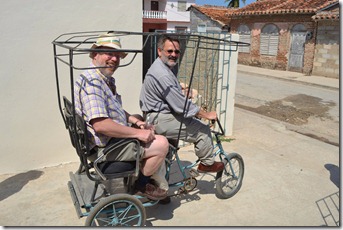
Heredios Santos, long-time pastor in Cuba Yearly Meeting, first mentioned the possibility of my going to Cuba in 2001. In 2008, there was an important informal meeting of Friends interested in Cuba at the Out for a walk in Cubameeting of the Section of the Americas of FWCC in Jackson County, Indiana. I was among those present. Maria Yi Reyna, pastor of the church in Holguin, Cuba, mentioned that the great need of the Cuba Yearly Meeting from Friends in the Americas was for resources to bolster their Quaker identity. A number of us sitting around the table were excited by this. Led by Kristen Richardson, the American Friends Service Committee sent a “Traveling Seminary” to Cuba Yearly Meeting in February of this year, with their Brazil rep, Jorge Lafitte, offering valuable workshops to Cuban Friends on non-violent conflict resolution and social change theory.

Meanwhile, Jay Marshall was in contact with the Clerk of Cuba Yearly Meeting, Ramon Gonzalez Longoria Escalona, and arranged a visit to the Yearly Meeting for me this February and March. I was invited to give a series of lectures at the Yearly Meeting sessions themselves, and afterwards a lecture at the Young Adult Friends Retreat and three workshops at the newer monthly meetings in Cuba.

A few observations about the background of Friends’ ministry in Cuba

I arrived in Holguin, Cuba, one of the larger cities in Cuba, at the eastern end of the island, on February 21. The following day, along with three representatives of New England Yearly Meeting, Benigno Sanchez-Steve and BenignoEppler, Victoria Rhoden, and Noah Baker-Merrill, I traveled the thirteen kilometers to Gibara, where the yearly meeting was to be held. Gibara is a small town of about 30,000 people on the coast. Hurricane Ike caused major damage in 2008, destroying much of the seawall. There has not been any money to repair the damage to the seawall. Friends in Gibara sheltered dozens of people in their church during the hurricane. Fortunately, there was very little damage to the church itself. They lost only a small portion of their roof. Also fortunately, Cubans were well prepared for the hurricane, and on the whole island, only two people lost their lives.

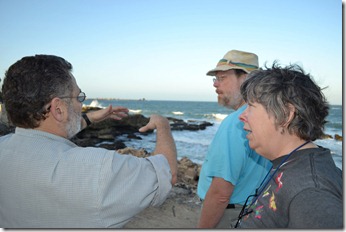
In the day before the Yearly Meeting sessions started, Benigno, a native of Cuba who emigrated to the United States at age 13, tried to orient us to the realities we would see around us. He emphasized that the Touring the beachorientation was coming through a particular lens – that is, his. The Cuban Revolution has emphasized human equality, but unfortunately, it has ended up with a process of equal immiseration, that is, everyone becoming equally poor. The Cuban government is the single employer. All property, including church property, belongs to the Cuban government – the Cuban government allows churches to use certain property, families to live in certain houses, and so forth, but all land belongs to the government. Industry and wages are at a very low level. Monthly wages of $15 to $25 are fairly usual for Cubans. It is not a living wage.
The Cuban revolution, Benigno said, was built on five pillars: Schools; Medical Centers; the Military; Prisons; and Emigration. So Cuba has a relatively high degree of educational attainment. It has an extraordinary high degree of doctors per capita. However, there are few jobs for those who finish schools. Doctors are paid very low salaries. Medical Benigno Sanchez-Epplerconsultations are free, but medicines are very difficult, if not impossible, to obtain, even over-the-counter medicines such as pain relievers. In the stores, there is virtually nothing for sale. There are, for example, no cars for sale; the few cars that one sees on the roads are 1950s American vehicles, often lovingly and painstakingly maintained, or later era Soviet cars, but none of recent vintage. The Cuban monetary system is very difficult to figure out; the Yearly Meeting treasurers keeps accounts in three currencies, the regular Cuban peso, the convertible Cuban peso, and United States dollars. An international like myself can carry the convertible peso, but is not allowed to carry regular pesos. (The informal exchange rates for those two currencies are remarkably different.)

With the military and prisons, there is a high degree of state control. There is virtually no place for open expression of political dissent. One of The streets of Cubathe complicating factors for gathering people for the Yearly Meeting sessions was that in one of the cities where there is a Friends Church, Banes, Mothers in White, a group of Mothers for political prisoners, was gathering for a protest. So the Yearly Meeting bus (the Wawa) would have to penetrate intense presence of security forces in order to bring Friends from Banes to the Yearly Meeting sessions.

It is hard to walk very far on the streets of Gibara (something that I did every day) without having someone approach you to ask for money (often quite desperately). During the time that I was there, I talked with two men, one younger and one older, who had received permission to Streets of Cubaemigrate to the United States. If a resident of Gibara receives remittances from someone working in the United States, they will be much better off than the ordinary Gibaran. One day, the three New England Friends, a Cuban Friend, and myself were walking through the streets of Gibara. The Cuban Friend explained how every house we saw with a fresh coat of paint was someone who had a spouse living abroad who sent remittances. Remittances are the second most important source of income for the island of Cuba (the most important source is tourism, all those happy Canadians that I flew down to Cuba with, and also back to Canada with.)

Getting news in Cuba is a challenge. There is no internet, and only very limited television and newspaper news coverage. Ramon, in Gibara, had to work hard to have a periodical delivered to him, and finally settled on a weekly (the Juventud). The big city Friends’ Church (Holguin) was able to have a daily delivered, the Granma. Unlike Iran, there is no English language news service – it is also in Spanish.

Yearly Meeting Sessions

It was a wonderful group of Cubans who gathered for Yearly Meeting. My lectures covered different areas of Quaker doctrine: the true nature of Quaker Community; Quakers and holiness; The Holy Spirit and Revelation; the Light of Christ; and Quakers and the testimonies. For the first two lectures, I read Cuba Yearly Meeting Group Photothem from manuscript; the last three were spoken from the silence. I spoke in English, and Benigno translated for me.

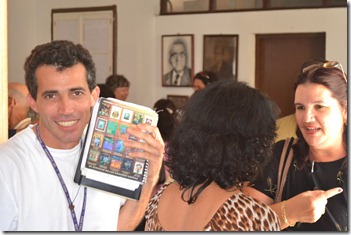
The Yearly Meeting sessions were very lively. They completed an extraordinary amount of business. The list of the Action Minutes from the Yearly Meeting comes to 57 Minutes, and when printed out, they cover four pages, single spaced. The clerk does a lot of talking there, but Yearly Meeting members are not shy to express themselves when the Spirit leads. The items that led to the most extensive discussion were the Nominating Committee Report and the proposal to build a meeting house for the Programmed Meeting in Havana. In Havana, the programmed  Friends meet in a space they rent from the Episcopal Church, and the latter has not always been hospitable. The Havana Friends proposed to throw a slab on top of the house of an existing member, but there were various problems with that, most notably, that Cuban law would not allow any deeding of the Friends in Cubanascent meeting house to Friends until the slab is actually completed, at the cost of $10,000. After considerable discussion, the Yearly Meeting approved a very diplomatically worded minute postponing any further consideration of the Havana Friends proposal, until after the change of the property laws expected from the Government in April. The Clerk, Ramon, tells me that he thinks the problem with the Episcopal Church is mostly at the local level, and that involving the Episcopal Bishop for Cuba may be able to resolve the problems between Havana Friends and the local Episcopal Church.
Another issue was starting up a Center for Quaker and Peace Studies, to supplement what theological education is available elsewhere in Cuba. More on that later.

The Friends’ Church in Puerto Padre desperately needs repair work. The school was confiscated at the time of the Cuban Revolution and is now in great disrepair, missing some (or most?) of its roof. Cuban Friends are trying to reclaim the school, and also need to find their title (or claim of title: legalities in respect to property questions are very complex)  to the Church property in order for repair work proceeds.

My first three lectures went well, but when my fourth lecture was scheduled, for Saturday night, I was suffering from severe intestinal distress. I felt that I could attend and also that I could say something,173092_10150117826343896_607083895_6455731_1994217_o but I did not feel up to speaking for the entire hour. I did speak for five minutes at the beginning out of the silence, but then I sat down and ceded the floor. The Holy Spirit was in charge, and it worked out well; several Friends, Cuban and North American, spoke out of the silence. Noah Baker-Merrill, a gifted minister from Vermont, spoke movingly about his experience with the Light. By the time of my concluding lecture on the Testimonies the next day, I had recovered and that also went well. That afternoon, busload after busload of Friends left the Yearly Meeting compound in Gibara. New England Friend Victoria Rhoden commented that, “four days ago, I did not even know these dear Friends, but now I find myself crying as they are leaving.” It was indeed a very poignant moment.
Workshops that I offered after Yearly Meeting Sessions

The next day, Monday, Feb. 28, was the occasion for an outing on the beach, with the clerk of the yearly meeting and his family, and all four of us from the United States. The following day, I bid adieu to the New England Friends. My first workshop was in a smaller church in Holguin, by the name of Vista Alegre. I presented a session on the Testimony of Simplicity, and then my full presentation on the Light of Christ, contrasting the views of George Fox, J. J. Gurney, and Rufus Jones.

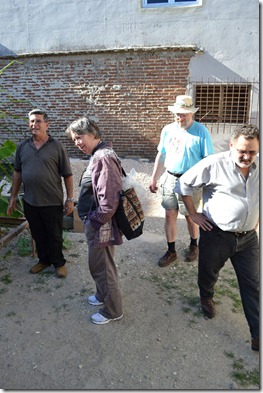
Then it was back to Gibara. That weekend the Young Adult Friends were gathering for a retreat. In many ways the Young Adult Friends are the 172742_10150117926143896_607083895_6456660_3544928_obackbone of the Yearly Meeting. There are nine monthly meetings in Cuba. The Clerk (Presidente) of Cuba Yearly Meeting, Ramon Longoria, is the pastor of the monthly meeting in Gibara. Most of the other monthly meetings are pastored either by a Young Adult Friend, or by someone who is only a few years removed from Young Adult Friends status (the upper age limit, there as here, is 35 years old). So, when I talked to the Young Adult Friends at their first session on Friday night, Mar. 4, I soon realized that I was talking to the emerging leadership of the Yearly Meeting. One thing that Cuba Yearly Meeting is asking for when they say they need help with issues of Quaker identity, is help with the spiritual formation of these Young Adult Friends who have stepped up into greatly needed positions of leadership in the Monthly Meetings.

I had been told that Young Adult Friends were very much concerned about issues of the Second Coming, so my talk on “the essentials of Quakerism” focused somewhat on the realized eschatology of earlyFriends talking in Cuba Quakerism, and how that connected to issues like early Quakers’ views of the sacraments. The next day had four sessions. One was a panel with three speakers addressing the three controversial issues among Young Adult Friends: what do Quakers think about the second coming; what do Quakers think about Satan; and should Quakers adopt a position of more latitude in terms of what church music are allowed into Friends’ churches.

This all plays into the Quaker identity issue in one way or another. Take church music: Quakers in Cuba are clear that they are not Pentecostal. They are concerned about the waves of Pentecostalism in Cuban culture that threaten to overtake variousCuba Yearly Meeting sessions forms of Cuban Christianity. One evening, while I was riding on the microbus, we passed a Pentecostal church service that was just ending. There were hundreds of people walking away from the church service. It was clearly very popular. Cuban Quakers like individual Cuban Pentecostals, (some work for Quakers in positions such as garderner) and even invite Cuban Pentecostal groups to rent their church complex: the “Orthodox” who rented the Gibara complex while I was there were Pentecostals, I was told. But Cuban Quakers are not about to adopt a premillennialist position on Second Coming for example.

One of the further workshops was offered by Lazaro, pastor of the Friends’ Church at Velasco, on the topic of “evangelization.” He asked me briefly to speak about evangelization in the United States, and IFriends at Cuba YM mentioned that evangelization by way of crusade seems on the decline here, but that the internet (both websites and blogs) were becoming more important in the US. I have a sense that evangelization in Cuba is quite different, especially since they have no internet.

The last week that I was in Cuba, I presented two more workshops. I visited the eastern end of the Yearly Meeting, in the neighborhood of Banes, the headquarters for Cuba Yearly Meeting sessionsthe United Fruit Company prior to the Cuban revolution. The Banes church is beautiful, with three F.U.M. work teams having done great work in restoring it. There is a beautiful garden in the Banes complex. Hurricane Ike occasioned great damage. Cuban Friends spent fifteen full days just getting the fallen trees and debris out of the Banes church grounds after the hurricane. But the garden has made a great recovery, albeit with many fewer trees.

This workshop was held in El Retrete, a church mission that was just given monthly meeting status. I was privileged to see the ceremony at which El Retrete received Monthly Meeting status. Within the space of a couple of hours, a Nominating Committee was Exploring in Cubaappointed, met, made its report, and the new Monthly Meeting, with help from many wise elders throughout the yearly meeting, composed its first minute. I then conducted a workshop, which included my Light of Christ talk, and a session on Quaker Spirituality focusing on John Woolman. My last workshop, at Bocas meeting, incorporated just the Light of Christ talk.
Cuba Yearly Meeting is a wonderful place that has accomplished much in two short decades under daunting odds. When the most severe repression ceased in Cuba, Cuban Quakers had less than 100 members. Anyone can tell you who were the faithful ones, the handful in each meeting, who kept the Cuban Quakers going in the years when the Cuban Communists were officially atheist and trying to put religion out of business. They are now up to about 500 members. Will they be able to keep their church growing?

Steve AngellSteve Angell is the Geraldine Leatherock Professor of Quaker Studies at Earlham School of Religion.